

The How to Guide for Not Having Regrets
The lowest place on the face of the earth, roughly ten times as salty as the ocean, and impossible to sink in. Fifteen minutes there is wonderful. Getting one detail wrong makes the whole stop miserable.
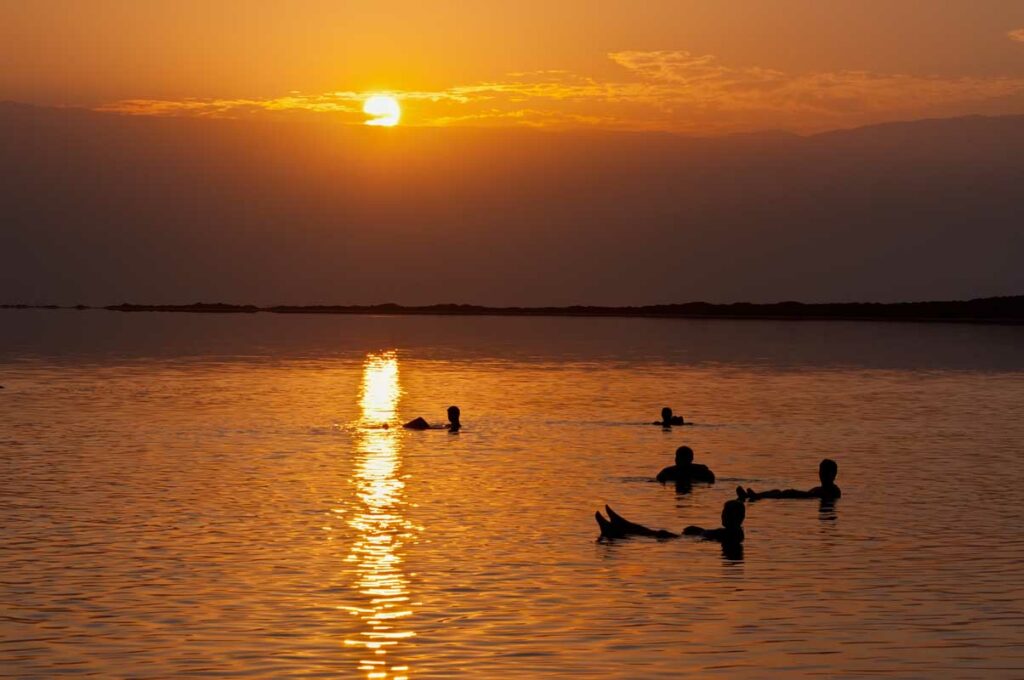
Nobody swims in the Dead Sea. Pilgrims wade out to their waist, sit back, and discover that the water will not let them sink. That is the part everyone remembers afterward. A few minutes of planning separates a wonderful hour from a painful one, so this article is mostly practical.
Why you float in the Dead Sea
The Dead Sea sits about fourteen hundred feet below sea level, the lowest point on any land surface on earth. The Jordan River flows in at the north end, and no river flows out. In that heat the water can only leave by evaporating, and every mineral the Jordan carried in stays behind.
Thousands of years of that process produce water roughly ten times as salty as the ocean. Salt water is denser than fresh water, and this water is dense enough that a human body cannot sink in it. You do not swim here. You lie back and the water holds you up whether you cooperate or not.
Scripture calls this the salt sea (Genesis 14:3). Ezekiel saw a vision of the same water healed, with fishermen standing along the shore and fish swarming in it (Ezekiel 47:8–10), a striking picture because nothing lives in that water now.
One sober note. The sea is shrinking. Water that once came down the Jordan is used upstream, mineral works evaporate more of what remains, and the surface has dropped roughly a meter a year for decades. Sinkholes open along the retreating shore, so swim only at established beaches.
What to do before you enter the water
Do not shave for a day or two beforehand. Salt at this concentration finds every nick and razor burn, and men who shaved that morning regret the decision within seconds.
Wear water shoes or sandals with a back strap. The bottom holds sharp salt crystals and loose rocks, and the shore can be slick.
Leave your jewelry on the bus. Silver in particular reacts badly with this water.
And assume that whatever you wear into this water may come out faded or damaged. Before you walk in, make a mental note of where to find the fresh water showers, because you will want one as soon as you come out.
What to do while you are floating
Walk in slowly. At about waist depth, sit down as though a chair were behind you and lean back. Your legs will come up on their own. The water feels heavy and slightly greasy on the skin.
Keep the water out of your eyes and out of your mouth. The salt stings ferociously in the eyes, tastes bitter and oily, and makes people sick if they swallow much of it. If any gets in your eyes, walk to a fresh water shower and flush them without rubbing.
Do not splash, do not dunk anyone, and do not float face down. Horseplay that is harmless at a typical swimming spot turns genuinely painful here, and one splash aimed at a friend can ruin their afternoon.
Try the mud if the beach has a mud station. Coat yourself, let the mud dry for a few minutes, then rinse. The mineral mud is a genuine local product, and your skin will feel remarkably smooth afterward.
What to do after you get out
Shower thoroughly, then shower again. Salt left on the skin keeps working and will itch for hours. Rinse your swimsuit, your shoes, and anything else that got wet. And expect any small cut you had forgotten about to announce itself for a minute or two.
Why the Dead Sea belongs on an itinerary
You are at the lowest place on land on this planet. The hills of Jordan rise to the east across the water, Masada and Qumran sit to your southwest, and Ein Gedi a few miles north of that. People float, laugh, and take pictures. But then beyond the novelty, and floating really is a novelty, people will go quiet and look around. Salt crusts white along the shoreline. Nothing lives in the water and nothing moves on it. Ezekiel pictured this same sea full of fishermen, and standing on that shore, a person can see what kind of promise that was!
Come and See
What might an hour at the lowest place on earth teach you?
Float with us and find out.
| Explore Upcoming Departures | Prepare To Be A Pilgrim |
 |

Sources and Further Reading
- Josephus, The Jewish War, book 4, which includes an ancient description of the lake and its buoyancy.
- Jerome Murphy-O’Connor, The Holy Land: An Oxford Archaeological Guide from Earliest Times to 1700, 5th ed. (Oxford University Press, 2008).
